What is AML compliance in the crypto industry?
AML compliance in crypto refers to the set of regulations, procedures, and
technologies that businesses must follow to prevent money laundering, terrorist financing, and
financial crime. It ensures legal operation and builds trust with regulators, banks, and
partners.
Why are AML regulations critical for cryptocurrency businesses?
AML regulations are designed to protect the financial system. For crypto
companies, following them reduces the risk of fines, loss of licenses, frozen assets, or being
cut off from banking services.
What are the global AML regulations for digital assets?
The Financial Action Task Force (FATF) sets global recommendations, while
jurisdictions such as the EU (MiCA, AMLD), the US (FinCEN, SEC), and Asia apply their own
frameworks. Compliance requires adapting to both global standards and local rules.
Who is required to implement AML compliance in crypto?
Exchanges, custodial wallets, OTC desks, brokers, NFT and DeFi platforms, and
any virtual asset service provider (VASP) that processes transactions or holds customer assets
are expected to comply.
What is an AML check for cryptocurrency wallets and transactions?
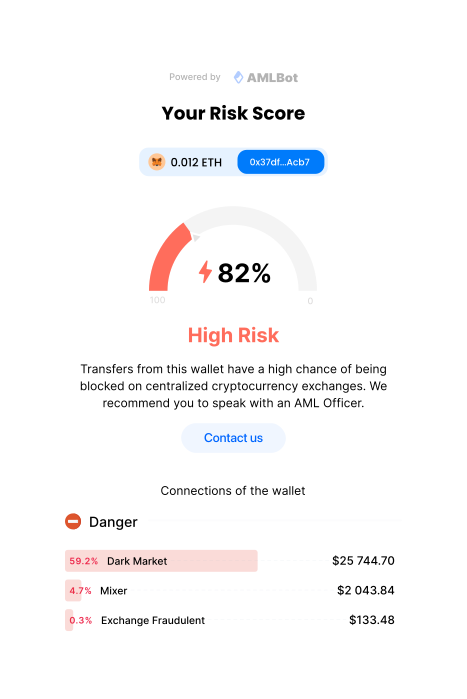
An AML check is a detailed risk analysis of wallets and transactions using
AMLBot algorithms, which includes:
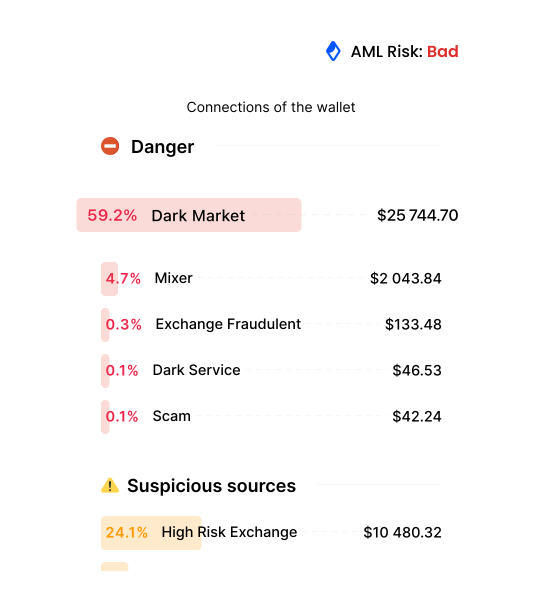
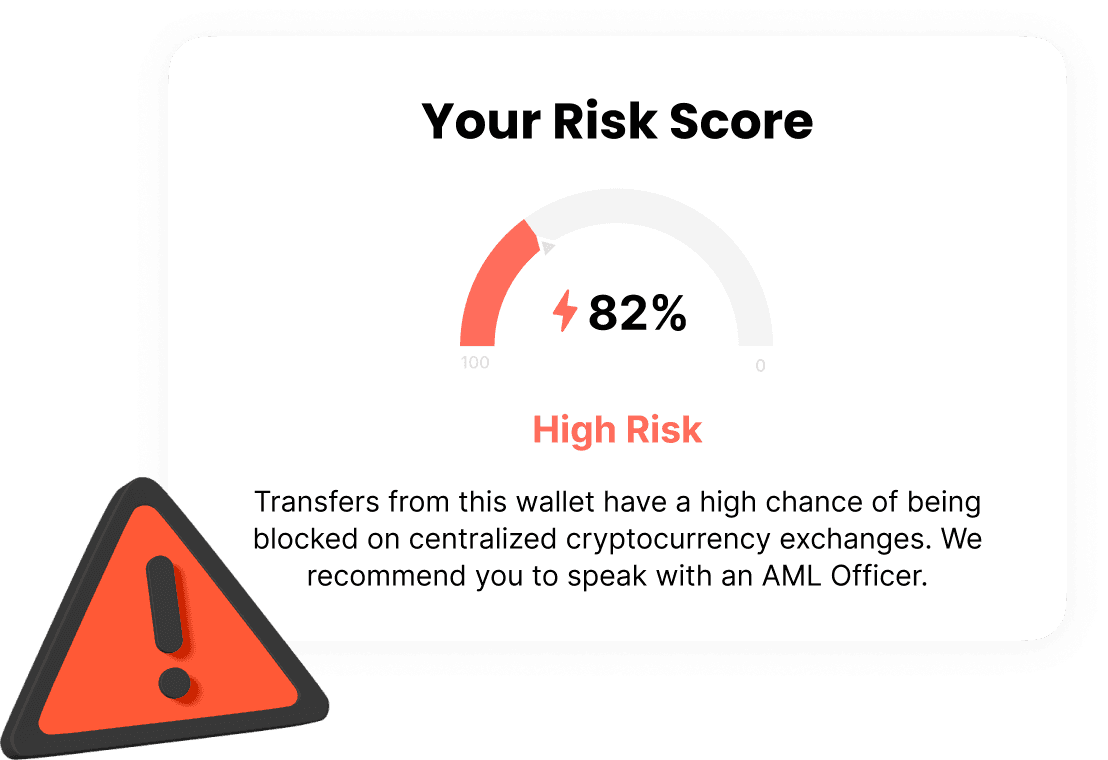
Risk score – a percentage showing the
likelihood of links to illicit activity (darknet, sanctions, scams, etc.).
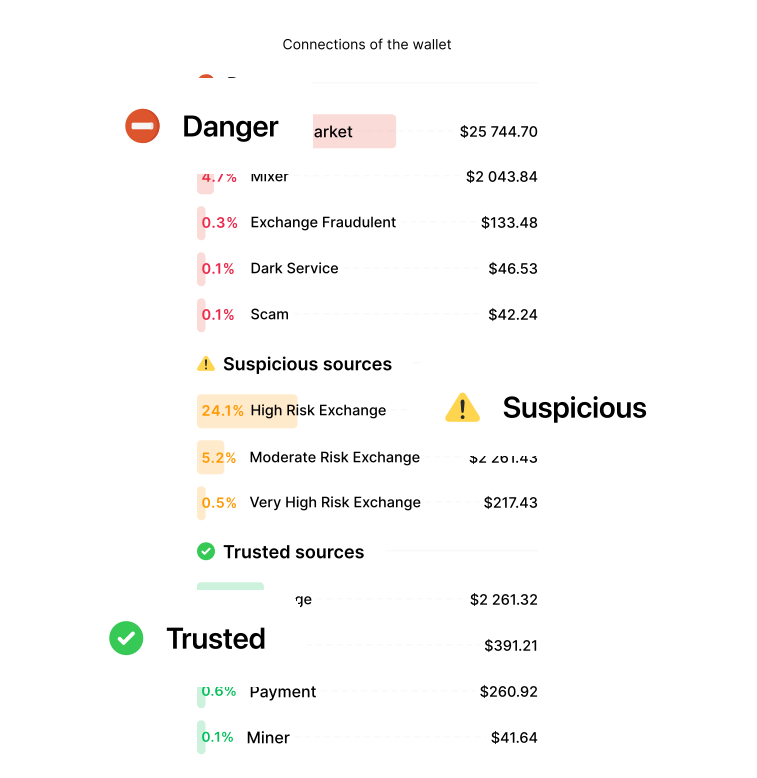
Risk
sources – categories such as mixers, fraud, stolen funds, sanctions or darknet
markets.
Connection analysis – reviewing the wallet’s transaction history and
links with other addresses.
Transaction perspective – for incoming payments the
sender’s address is analyzed, for outgoing payments the recipient’s address.
AMLBot
provides instant checks with global coverage, helping companies identify risks in real time and
avoid suspicious transactions.
What are the key requirements for crypto AML compliance?
Requirements typically include customer due diligence (KYC/KYB), transaction
monitoring (KYT), risk assessment, record-keeping, suspicious activity reporting, and ongoing
audits. Many businesses rely on solutions like AMLBot to automate these steps and stay
audit-ready.
How can a crypto business achieve AML compliance efficiently?
Most companies use automated AML compliance solutions to screen wallets,
monitor transactions, and generate reports. AMLBot delivers these capabilities in line with FATF
standards, reducing manual effort and helping companies scale securely.
What is the difference between KYC, KYB, and KYT in compliance?
KYC (Know Your Customer) verifies individuals, KYB (Know Your Business)
validates companies, and KYT (Know Your Transaction) analyzes the flow of funds. Together they
form the foundation of crypto AML compliance.
What are the risks of non-compliance with AML regulations in crypto?
Non-compliance can result in regulatory penalties, blocked transactions,
frozen accounts, reputational damage, and even criminal liability.
How do AML compliance solutions help with international regulations?
They align processes with FATF guidelines and local rules, provide real-time
transaction monitoring, and deliver documentation required for regulators, partners, and
auditors.
Can AML compliance tools help prevent fraud and scams in crypto?
Yes. By flagging suspicious addresses, detecting high-risk patterns, and
screening counterparties, compliance tools reduce fraud and scam exposure. AMLBot’s monitoring
helps businesses avoid transactions linked to hacks, darknet markets, or sanctioned entities.
How do I start building an AML compliance program for my crypto
company?
Begin with a risk assessment, establish AML policies, integrate screening and
monitoring tools, train your team, and document everything for future audits.